
Everything You Need To Know About The Advance Provisioning Allowance
In this blog:
- What’s an APA?
- Where Your APA Money Actually Goes?
- Why It’s Kept Separate From the Charter Fee?
- What’s Covered, and What Isn’t?
- How Much You Should Actually Set Aside?
- What Happens If You Don’t Spend It All?
- A Real Example To Show How It Works
- Does This Include Tipping the Crew?
The Advance Provisioning Allowance, or APA, is the part of chartering a yacht that catches most first-time guests off guard. It is a prepayment, on top of the charter fee, that covers the running costs of your week on board: fuel, food, drink, marina fees, and the dozens of smaller expenses a captain settles on your behalf before you even notice them.
For anyone still working out what is APA in yacht charter terms, the short version is that it’s less a fee and more a working budget the crew manages for you. Understanding how it works, what it covers, and what happens to what you don’t spend makes the whole booking process far less confusing, and this guide walks through all of it.
What an Advance Provisioning Allowance is?
An Advance Provisioning Allowance is a sum charterers pay in advance, alongside the base charter fee, to cover the yacht’s running costs for the duration of the trip. Unlike the charter fee itself, which pays for the yacht, her crew, and her insurance, the APA exists purely to fund what the crew spends on your behalf once you are on board. Think of it less as an extra cost and more as a working float that the captain draws from for everything from diesel to dinner.
Brokers, SSY included, ask for the APA as a percentage of the base charter fee rather than a fixed figure, since nobody can know in advance exactly how far a group of guests will want to cruise or how many bottles of wine a week will call for. This is also why, when people search for an advance provisioning allowance explained in plain terms, the explanation almost always comes back to that one idea: it’s a flexible fund sized to your trip, not a flat add-on fee.
How the APA is used during your charter?
Once your charter begins, the captain holds and manages the APA on your behalf, spending it on fuel, food, beverages, and the dozens of smaller costs that come with a week at sea. A good captain works from the preference sheet you complete with your broker beforehand, covering everything from dietary requirements to favorite spirits, so the first provisioning run before you even step aboard is already tailored to your group rather than generic.
As the week goes on, the crew keeps receipts and a running account of what has been spent, and captains are happy to share an update if you ask how the budget is tracking partway through. If an unplanned cost comes up, a last-minute fuel top-up for an extra excursion, say, or a special request for a particular wine not in the original provisioning list, a conscientious captain will flag it before spending rather than after. This is one of the more reassuring parts of chartering with APA in yacht charter arrangements generally: nothing significant gets spent without your awareness, even though you’re not the one handling the money day to day.

Why the APA is kept separate from the charter fee?
Keeping the Advance Provisioning Allowance separate from the charter fee is not just contractual tidiness, it protects both sides of the booking. The charter fee is fixed: it pays for the yacht, the crew, insurance, and maintenance, and it does not change regardless of how your week actually unfolds. Running costs, by contrast, genuinely vary from one charter to the next. A family that stays close to one bay and eats simply will spend differently from a group chartering a larger motor yacht and cruising further each day, so folding those costs into a flat fee would mean either overcharging conservative guests or leaving generous spenders short.
Separating the two also keeps the accounting honest. Because the APA is spent on your behalf and accounted for with receipts, you can see exactly where the money went, a level of transparency a single bundled price could never offer. It also means your broker can quote a clean, comparable charter fee across different yachts, since nothing variable is hidden inside it.
What the APA covers, and what it doesn’t?

The Advance Provisioning Allowance generally covers:
- Fuel for the yacht, tender, and any water toys or generators used during the charter
- Food and beverages, provisioned according to your preference sheet
- Marina and port fees wherever the yacht docks
- Communications such as onboard internet or satellite use
- Special requests, from hired equipment to arranging a particular excursion ashore
What the APA does not cover is just as important to understand. The charter fee itself already includes the yacht, crew, and insurance, so none of that comes out of the APA. Crew gratuity, which is customary but not mandatory and left entirely to the charterer’s discretion, is handled separately too, and we cover it in more detail below. The same applies to any costs the contract specifically excludes, such as diving certification courses or a one-way relocation fee if you start and end the charter in different ports. If actual running costs end up higher than the APA you prepaid, the shortfall is settled before disembarkation, usually in cash.
A quick example of how it plays out
Numbers make this easier to picture. Say a week’s charter fee is €50,000 and your broker recommends an APA of 35 percent, that’s €17,500 set aside for fuel, provisioning, and running costs. Over the week, the captain spends €10,600 on fuel and water toys, €5,300 on food and drink based on your preference sheet, and €880 on marina fees, leaving a little over €700 unused.
On the final evening, the captain walks you through the receipts, you both sign off on the total, and that remaining balance is handed back to you in cash before you leave the yacht. If instead the week had run slightly over budget, that same conversation would settle the difference the other way, with you topping up rather than receiving a refund.
How much APA should you budget?
How much is APA on a yacht charter depends mostly on the type of yacht. Sailing yachts typically need an APA of around 30 percent of the base charter fee, since they burn comparatively little fuel. Motor yachts generally run higher, somewhere between 35 and 40 percent,
Your broker will usually recommend a starting percentage based on the yacht, the season, and the itinerary you have in mind, then adjust it once your preference sheet is in. A quieter week with modest dining preferences might comfortably sit at the lower end of that range, while a group planning daily excursions, premium wines, and plenty of water sports should budget toward the higher end rather than risk a shortfall mid-charter. It’s generally better to slightly overestimate than underestimate, since any unspent APA refund simply comes back to you at the end, while running short mid-charter means a difficult conversation about topping up.
What happens to any unspent APA?
At the end of the charter, the captain prepares a full APA report, essentially a receipts-backed account of everything spent during your week, and walks through it with you before you disembark. Once you’ve reviewed and agreed the figures, any unspent balance is refunded directly, either in cash or by bank transfer if that’s easier for larger amounts.
If spending ran over the amount you prepaid, the difference is settled the same way, in reverse. This is exactly why keeping a rough mental tally during the week, or simply asking the captain for a quick update partway through, is worth doing: it means the final reconciliation on the last day holds no surprises either way, and the unspent APA refund, when there is one, feels like a straightforward handover rather than a negotiation.
Is crew gratuity part of the APA?
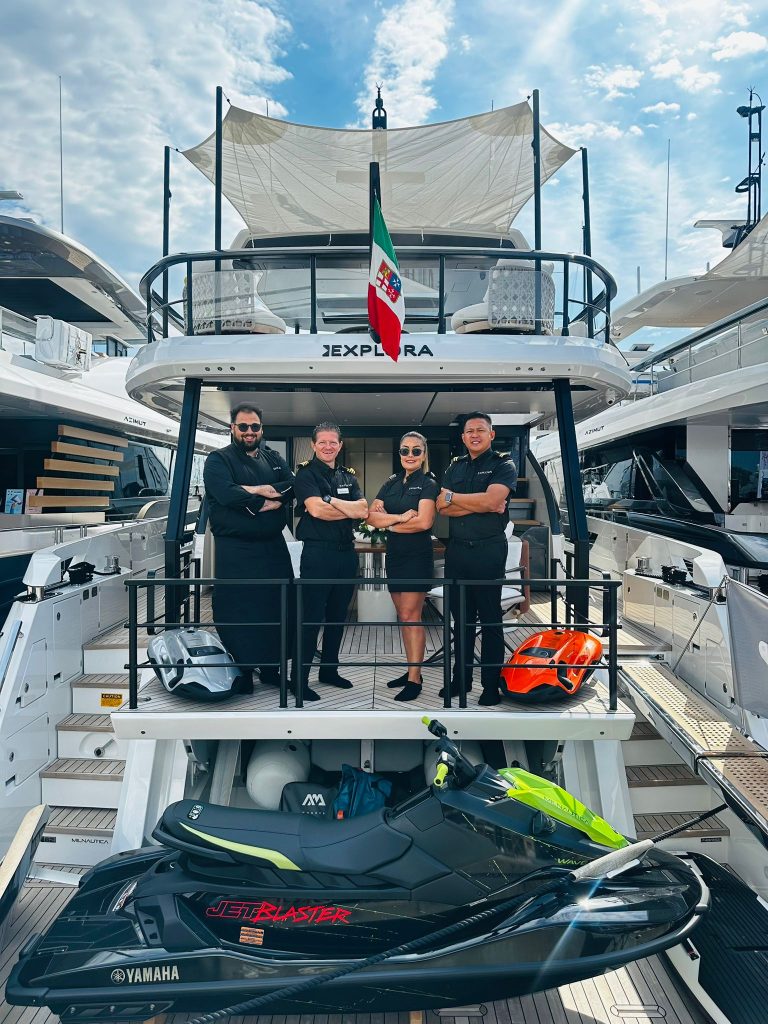
Gratuity is a separate matter from the APA, and it’s customary rather than mandatory. Under MYBA guidelines, tipping is left entirely to the charterer’s discretion, there’s no fixed rule that says you must tip. In practice, most charterers do tip, typically somewhere in the 10 to 20% range of the base charter fee, handed to the captain in cash on the last evening to be shared among the crew. Your broker can tell you what’s typical for your itinerary and yacht size, but the final amount, and whether you tip at all, stays entirely your call.
Gratuity is traditionally handed to the captain as a single amount on the final evening of the charter, for the captain to divide among the crew rather than tipping individual crew members separately. If you would rather arrange it in advance, your broker can usually add it to your final payment and pass it along, keeping it entirely distinct from the APA accounting described above.
Plan your charter with a clear budget
Understanding the Advance Provisioning Allowance before you book means no surprises once you’re on board, just a clear sense of what you’re paying for and why. If you’d like help working out a realistic APA for your next trip, enquire now and we’ll walk you through it alongside the rest of your charter planning.


